
T.Elise@bookwyrm.social reviewed The Shock Doctrine by Naomi Klein
None
5 stars
Truly one of the best books I’ve read.
662 pages
English language
Published Feb. 5, 2007 by A.A. Knopf Canada.
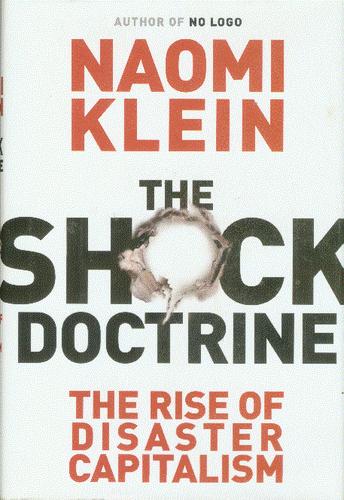
An introduction to "disaster capitalism" argues that the global free market has exploited crises, violence, and shock in the past three decades to promote radical privatization that benefits large corporations and powerful interest groups.
An introduction to "disaster capitalism" argues that the global free market has exploited crises, violence, and shock in the past three decades to promote radical privatization that benefits large corporations and powerful interest groups.
Truly one of the best books I’ve read.
Klein reviews the role of the Chicago School and other neoliberal acolytes in driving the privatization of public goods and functions for profit, particularly around wars. While this book might not give the most accurate/complete accounting of particular events (the role of Milton Friedman in Chile stands out as fairly embellished), its breadth helps demonstrate that for every success neoliberal backers can claim in specific countries/policies, there are numerous other examples where those exact same policies not only failed, but demonstrably harmed societies. Reading this in 2025 was depressing, as the ethical lapses of the GW Bush administration that Klein dissects (rightly) seem downright quaint compared to the current administration's bald faced corruption. Highly recommend
Klein reviews the role of the Chicago School and other neoliberal acolytes in driving the privatization of public goods and functions for profit, particularly around wars. While this book might not give the most accurate/complete accounting of particular events (the role of Milton Friedman in Chile stands out as fairly embellished), its breadth helps demonstrate that for every success neoliberal backers can claim in specific countries/policies, there are numerous other examples where those exact same policies not only failed, but demonstrably harmed societies. Reading this in 2025 was depressing, as the ethical lapses of the GW Bush administration that Klein dissects (rightly) seem downright quaint compared to the current administration's bald faced corruption. Highly recommend